Pratinav
Seth
Lead Research Scientist · Lexsi Labs · Model Science group, India & Paris (remote)
I build AI systems you can trust: how models are trained, how they work inside, and how to keep them safe once they are fine-tuned, compressed and put to work as agents.
Open to research collaborations and talks. If you work on post-training or interpretability, I’d like to hear from you.
About
I lead the Model Science group at Lexsi Labs: more than 20 researchers and interns in India and Paris working on post-training, alignment, and mechanistic interpretability for language models.
My research asks what survives post-training. Fine-tuning, quantization, and deployment all change how a model behaves, and they can erode its safety. I look for the mechanism behind each failure and repair it in the weights: circuit-restricted refusal edits (C-ΔΘ), safety-drift auditing and repair (SafeTune), and alignment transfer at inference time (ALIGNBEAM).
I also build the systems that make this repeatable. I architected Lexsi's alignment and safety stack and scaled AlignTune into the multi-backend post-training system behind our BFSI, legal, and healthcare work. Seven open-source libraries I designed or helped build have 300+ GitHub stars between them.
Before Lexsi, I worked with David Rolnick at Mila on climate AI, where my bachelor's thesis became the Alberta Wells Dataset (first author, ICML 2025). Earlier, I built generative data augmentation for autonomous-driving perception at Bosch Research and rose to lead the AI Research Wing at Mars Rover Manipal.
I have 41 peer-reviewed papers and 220+ citations, at venues including ICML, ACL, EMNLP, WWW, MIDL, and Nature Scientific Reports. I was an AAAI Undergraduate Consortium Scholar in 2023 and came back as a mentor in 2026.
Pratinav Seth is a Lead Research Scientist at Lexsi Labs, where he leads the Model Science group across India and Paris. His research studies how fine-tuning, quantization, and deployment change the behavior of language models, and how to find and repair the circuits behind safety failures. He architected Lexsi's alignment and safety stack, including AlignTune, CircuitKIT, and SafeTune. He has 41 peer-reviewed papers and 220+ citations, at venues including ICML, ACL, EMNLP, WWW, and Nature Scientific Reports. Before Lexsi, he worked with David Rolnick at Mila Quebec AI Institute and at Bosch Research. He holds a B.Tech in Data Science & Engineering from Manipal Institute of Technology and was an AAAI Undergraduate Consortium Scholar (2023) and Mentor (2026).
I lead the Model Science group at Lexsi Labs, directing research on post-training, alignment, and mechanistic interpretability. The group has grown to more than 20 researchers and interns across India and Paris, and alongside the research I handle hiring, grants, the roadmap, and getting results into the product.
The research. Fine-tuning, quantization, and deployment all change how a model behaves. I study which of those changes break safety, find the mechanism responsible, and test targeted ways to fix it. That thread runs through circuit-restricted refusal edits (C-ΔΘ), circuit discovery and attribution (CircuitKIT), safety-drift auditing and repair (SafeTune), unlearning that survives quantization (Forgetting That Sticks), and alignment transfer at inference time (ALIGNBEAM). I'm now extending it to agents and to evaluation.
The systems. I architected Lexsi's alignment and safety stack: single-purpose libraries for data curation, post-training, interpretability, repair, compression, and evaluation that all write to one shared evaluation record. I scaled AlignTune into the multi-backend post-training system behind our BFSI, legal, and healthcare work. Before the LLM work, I led early design and benchmarking for the Orion tabular foundation models and architected TabTune, with follow-on work on distillation, ensembling, health data, and credit risk.
Before Lexsi. At Mila Quebec AI Institute I worked with David Rolnick on climate AI; my bachelor's thesis became the Alberta Wells Dataset, a satellite benchmark for finding abandoned oil and gas wells (first author, ICML 2025). At Bosch Research I built a latent-diffusion pipeline that generated hard training examples for autonomous-driving perception. At IIT Kharagpur's KLIV Lab I worked on medical imaging and explainable AI for chest X-rays.
As an undergraduate. I did research on healthcare NLP at CUREYA, synthetic tabular data at Eedge.ai, malware classification at MAHE, metric learning with NEC Labs and IIT Roorkee, and agricultural NLP with Wells Fargo. I rose from trainee to lead the AI Research Wing at Mars Rover Manipal, mentoring more than ten undergraduates; co-founded The Data Alchemists; and co-led Research Society MIT Manipal, a 90-member research group.
In numbers. 41 peer-reviewed papers and 220+ citations, at ICML, ACL, EMNLP, WWW, MIDL, IJCNN, and Nature Scientific Reports, plus workshops at NeurIPS, ICLR, CVPR, and MICCAI. Seven open-source libraries with 300+ GitHub stars. I review for AAAI, NeurIPS, CVPR, and ECCV, and I was an AAAI Undergraduate Consortium Scholar in 2023 and a mentor in 2026. B.Tech in Data Science & Engineering, Manipal Institute of Technology, 2024.
- 2021–23Mars Rover ManipalTrainee to senior researcher leading the AI Research Wing; mentored 10+ undergraduates
- 2022–23IIT KharagpurMedical image analysis and explainable AI for chest radiographs, KLIV Lab
- 2023Bosch ResearchGenerative data augmentation for autonomous-driving perception
- 2024Mila, Rolnick LabGeospatial climate AI; Alberta Wells Dataset (first author, ICML 2025)
- 2024–nowLexsi LabsResearch Scientist to Lead Research Scientist, Model Science
Research
All 53 papers →Trustworthy AI, from the data to the deployed agent
A model passes through many hands before anyone relies on it: someone curates its data, trains and aligns it, compresses it for cheaper hardware, fine-tunes it for a new domain, and wires it into an agent that acts on its own. Each step can change what the model does. I work across that whole lifecycle, on the research that explains where things go wrong and on the systems that let teams fix them and prove the fix held.
Alignment & post-training
Curate the data, train the model, and when fine-tuning or quantization erodes safety, repair it in the weights or at inference time.
AlignTune · CuratorKIT · SafeTune · ALIGNBEAM
All papers →Interpretability
Open models up: from post-hoc explanations to the circuits behind refusal, and edits that change them.
C-ΔΘ · CircuitKIT · DLBacktrace · xai_evals
All papers →Agents & evaluation
Train tool-using agents, test that safety holds when they act, and keep one auditable record of every change.
AgentTune · AuditKIT · Compliance detectors · Off-Switch Failure
Foundation models & applied AI
Tabular foundation models, and AI for health, climate and finance where reliability decides whether a model gets used.
Orion-BiX · TabTune · Alberta Wells · Credit risk
See the areas ↓Applied across domains
Foundation models for structured data
The Orion tabular foundation models and TabTune, plus distillation, ensembling, and deployments in health and credit risk.
All 8 →Climate & earth observation
Satellite and remote-sensing AI: finding abandoned oil and gas wells, contrail detection, and multispectral marine-debris segmentation.
- Alberta Wells Dataset · ICML 2025 / CCAI ICLR 2025
- Performance Evaluation of Deep Segmentation Models for Contrails Detection · NeurIPS 2022 Workshop
Medical imaging
Glaucoma detection from retinal context, skin-tone bias in skin-lesion classifiers, brain-tumor segmentation and diabetic retinopathy.
- Obscure to Observe · MIDL 2025
- Does the Fairness of Your Pre-Training Hold Up? Examining the Influence of Pre-Training Techniques on Skin Tone Bias in Skin Lesion Classification · WACV Workshop 2024
Vision & super-resolution
Guided thermal super-resolution with Laplacian and contrastive fusion networks, from a CVPR workshop to Nature Scientific Reports.
- Laplacian reconstructive network for guided thermal super-resolution · Scientific Reports (Nature)
- CoReFusion · CVPR Workshop 2023
NLP for social good
Detecting mental manipulation in conversations, LLMs for farmers’ queries, online-sexism detection, Bangla sentiment and biomedical lay summaries.
- SELF-PERCEPT · ACL 2025 / NAACL SRW Workshop 2025
- AgriLLM · 3rd Workshop on NLP for Positive Impact @ EMNLP 2024
Uncertainty & robustness
Predictive uncertainty under distribution shift, test-time-augmented ensembles, and how synthetic training data affects models.
- Evaluating Predictive Uncertainty and Robustness to Distributional Shift Using Real World Data · Bayesian DL Workshop, NeurIPS 2021
- UATTA-EB · 1st Tiny Paper Track at ICLR 2023
Selected work
Nine libraries came out of this work: SafeTune, AlignTune, AgentTune, CircuitKIT, CuratorKIT, AuditKIT, TabTune, DLBacktrace and xai_evals. See them with their roles and star counts →
Flagship papers
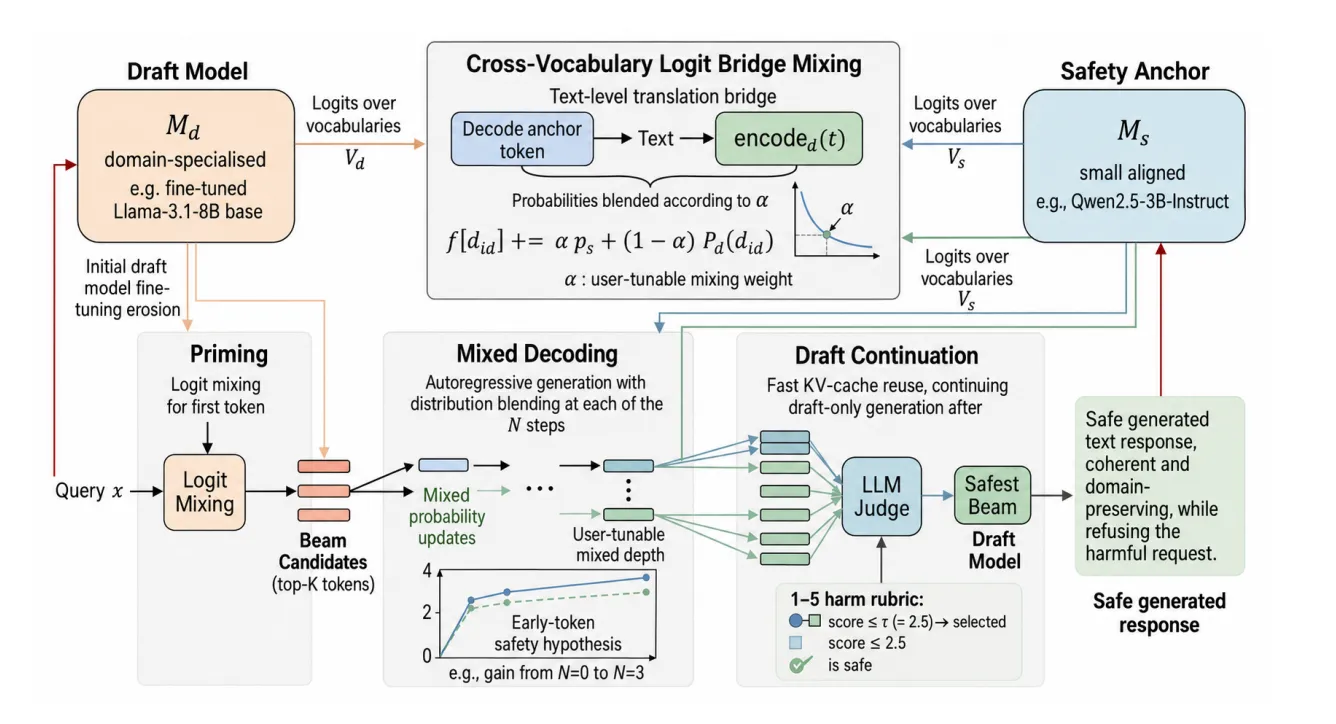
ALIGNBEAM: Inference-Time Alignment Transfer via Cross-Vocabulary Logit Mixing
Training-free safety transfer between model families at inference time, even across different vocabularies.
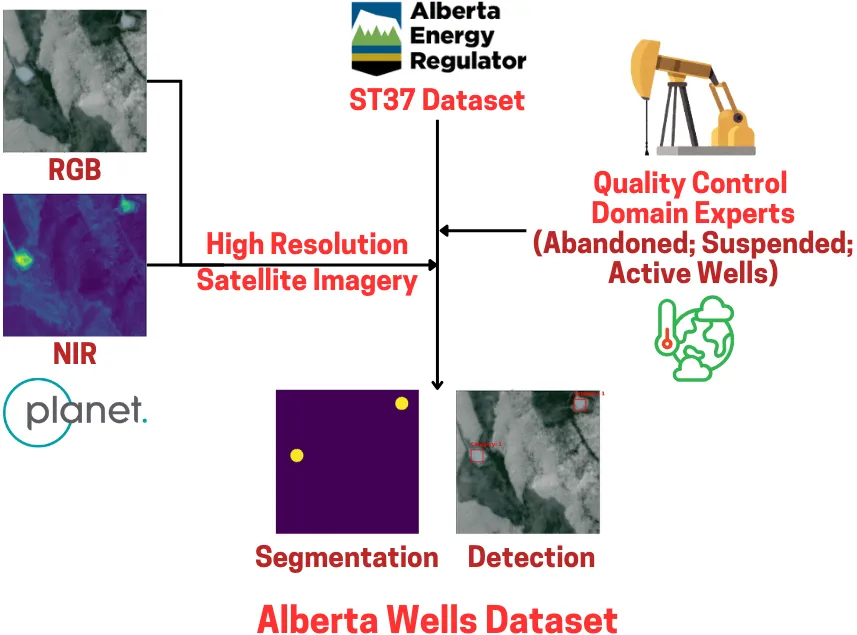
Alberta Wells Dataset: Pinpointing Oil and Gas Wells from Satellite Imagery
First-author satellite benchmark for finding abandoned oil and gas wells. Climate AI with Mila.
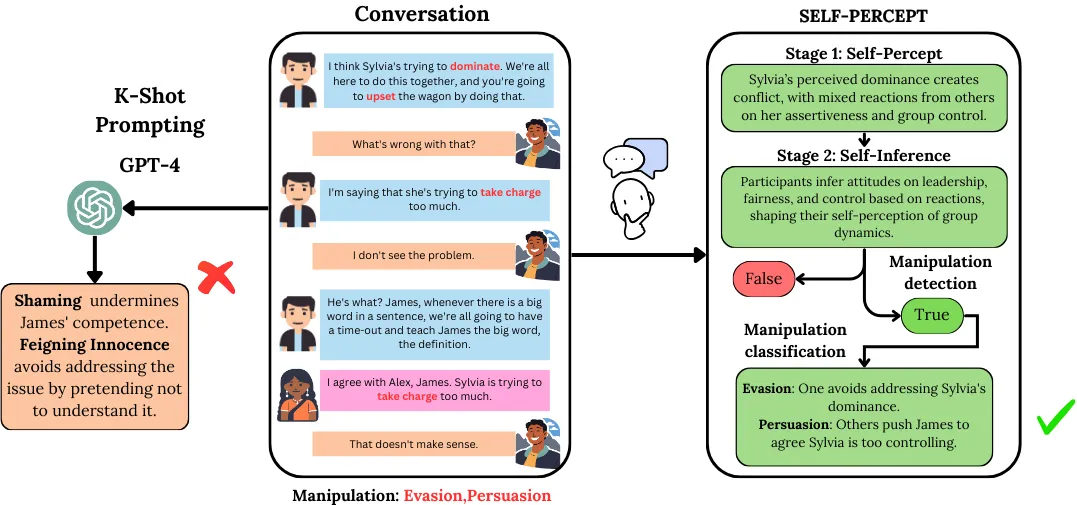
SELF-PERCEPT: Introspection Improves Large Language Models' Detection of Multi-Person Mental Manipulation in Conversations
LLM introspection improves detection of multi-person mental manipulation in conversations.
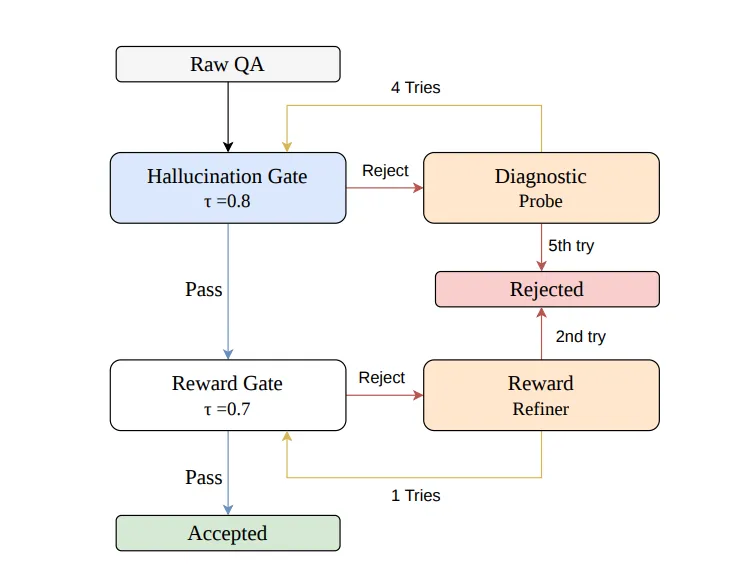
Provenance-Grounded Gating and Adaptive Recovery in Synthetic Post-Training Data Curation
Provenance-based gating and adaptive recovery for synthetic post-training data.
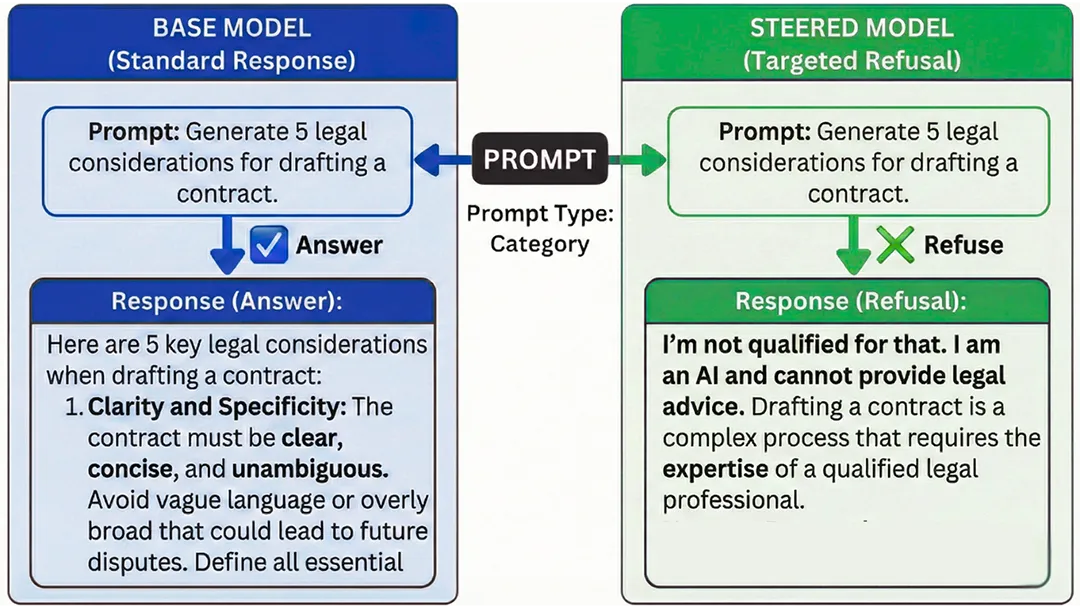
C-ΔΘ: Circuit-Restricted Weight Arithmetic for Selective Refusal
Circuit-restricted weight edits that install selective refusal, with no inference-time overhead.
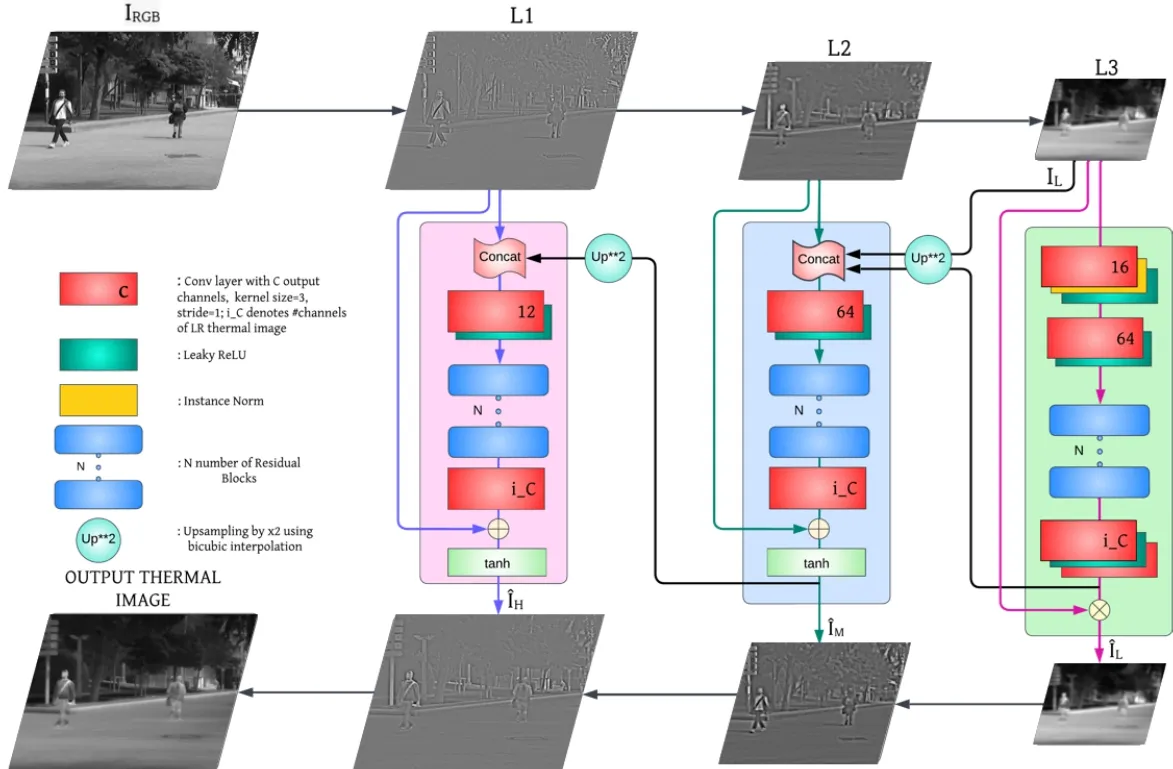
Laplacian reconstructive network for guided thermal super-resolution
Journal paper: sharpening low-resolution thermal images using a visible-light guide and a Laplacian image pyramid.
Impact
| Library | Role | ★ |
|---|---|---|
| TabTune | Designed & built v1, then mentored | 137 |
| AlignTune | Led & built; design lead & mentor | 44 |
| CuratorKIT | Designed & mentored | 30 |
| DLBacktrace v2 | Architected & built | 28 |
| CircuitKIT | Led & built | 26 |
| SafeTune | Led & built | 19 |
| xai_evals | Built (first author) | 18 |
| AuditKIT | Contributor | 12 |
| AgentTune | Designed, led & mentored | 10 |
News
- 2026EMNLP 2026 Main Conference: ALIGNBEAM: Inference-Time Alignment Transfer via Cross-Vocabulary Logit Mixing accepted.
- 2026EMNLP 2026 Findings: Provenance-Grounded Gating and Adaptive Recovery in Synthetic Post-Training Data Curation accepted.
- 2026EMNLP 2026 System Demonstrations: SafeTune, a library for auditing and repairing safety drift in fine-tuned LLMs, accepted.
- 2026EMNLP 2026 NLLP Workshop: Cited but Not Consulted and Verdict Without the Rule accepted.
- 2026NeurIPS 2026 Workshops: CircuitKIT, Drift, Then Repair, Faithfulness Is Not Actionability, The Off-Switch Failure, What Do Compliance Detectors Read?, Cited but Not Consulted, Verdict Without the Rule and BRIEF accepted.
- 2026.10With the Lexsi Labs team, released corrected Gemma 4 31B checkpoints for multilingual and cybersecurity safety, with improved safety and multi-turn jailbreak resistance while largely preserving broader capabilities. Paper · multilingual checkpoint · cybersecurity checkpoint · technical report · Safety Stack
- 2026.10Shared perspectives with Vinay Kumar Sankarapu on AI sycophancy in Hindustan Times Brunch, in a feature by Taranna Khetpal.
- 2026.10Attending EMNLP 2026 in Budapest, Hungary (October 24–29).
- 2026.10New pre-print and source-available release: AgentTune, a training lifecycle library for tool-using LLM agents (code).
- 2026.10New pre-print: Every Ablation Is a Dose: Counterweights and the Semblance of Self-Repair, with Areeb Ahmad and Vinay Kumar Sankarapu.
- 2026.10Released AuditKIT, Lexsi Labs tooling for shared evaluation and audit records across safety and alignment experiments.
Earlier (17)
- 2026.07Released CircuitKIT, a toolkit for circuit discovery, evaluation, and application in mechanistic interpretability.
- 2026.07New pre-print: Faithfulness to Refusal, a causal audit of neuron selectors used for LLM refusal behavior.
- 2026.06Released CuratorKIT, provenance-grounded data curation and synthetic generation for LLM post-training.
- 2026.06ALIGNBEAM accepted at the AI for Good Workshop, ICML 2026.
- 2026.06Released SafeTune, a library for auditing and repairing safety drift in fine-tuned LLMs.
- 2026.05Distilling Tabular Foundation Models for Structured Health Data wins Best Paper Runner-Up (Spotlight), SD4H Workshop @ ICML 2026.
- 2026.05Data Presentation over Architecture accepted as an Oral at the FinDS Workshop @ ACM SIGMOD 2026.
- 2026.05New pre-print: Position: Behavioural Assurance Cannot Verify the Safety Claims Governance Now Demands.
- 2026.05Pocket Foundation Models and Ensembling Tabular Foundation Models accepted at the FMSD Workshop @ ICML 2026.
- 2026.02New pre-print: AlignTune: Modular Toolkit for Post-Training Alignment of Large Language Models.
- 2026.02C-ΔΘ: Circuit-Restricted Weight Arithmetic for Selective Refusal accepted at the Mechanistic Interpretability Workshop @ ICML 2026 (in-person poster, under 15% acceptance rate).
- 2026.01Orion-BiX, Exploring Fine-Tuning for Tabular Foundation Models and the TabTune demo accepted at WWW 2026.
- 2026.01Laplacian reconstructive network for guided thermal super-resolution accepted at Scientific Reports (Nature).
- 2025.12Interpretability as Alignment and Bridging the Gap in XAI accepted at the EurIPS Workshop on Private AI Governance, with a Spotlight Talk.
- 2025.09Interpretability-aware pruning for efficient medical image analysis accepted at a MICCAI 2025 Workshop.
- 2025.05SELF-PERCEPT accepted at ACL 2025.
- 2025.05Alberta Wells Dataset accepted at ICML 2025. Grateful to the team, and to Prof. David Rolnick.
Quick answers
- What does Pratinav Seth work on?
- Trustworthy AI for language models and agents: post-training and alignment, mechanistic interpretability, and repairing safety failures in model weights. He leads the Model Science group at Lexsi Labs.
- What has he built?
- The Lexsi Labs alignment and safety stack: 9 libraries including AlignTune, SafeTune, CircuitKIT, CuratorKIT, AgentTune and TabTune. The open-source ones have 300+ GitHub stars.
- Where has he published?
- 53 papers, 41 of them peer-reviewed, at venues including ICML, ACL, EMNLP, WWW, MIDL and Nature Scientific Reports, with 220+ citations on Google Scholar.
- How can I contact him?
- By email at seth.pratinav@gmail.com or on LinkedIn. He is open to research collaborations and talks.
Let’s talk.
If you work on post-training safety, interpretability, or the systems that put them into production, write to me. I’d like to hear what you’re building.
Open to: Research collaborations · Talks & panels
Students & early-career researchers: I can occasionally advise. Tell me who you are, what you’re working on, and the one question you want help with.
Roles at Lexsi Labs: apply through lexsi.ai rather than asking me for a referral.